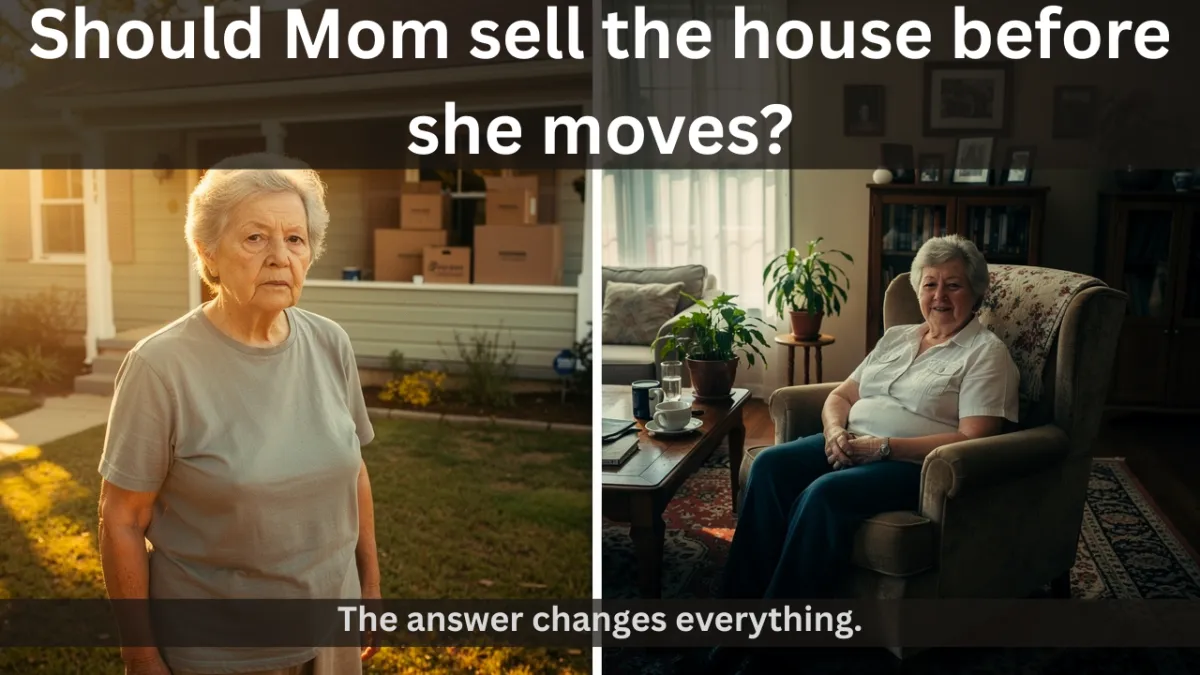
Sell First or Move First? How to Navigate the Timing Tension in Senior Transitions
Your mom has decided she's ready to move to assisted living. Or maybe the decision was made for her, by a fall or a diagnosis or the slow accumulation of days that became unmanageable. Either way, the house still stands there — full of furniture, full of decades, full of questions about what happens next and in what order.
This is where families find themselves stuck. Not because they don't know what needs to happen, but because the sequence feels impossible to get right. Sell the house first, and you're racing against a closing date while trying to sort through sixty years of belongings. Move first, and suddenly you're paying for two places while an empty house sits on the market, utilities running, yard growing, worry compounding.
Neither path is wrong. But each one asks something different of you, and understanding those demands upfront is what turns an overwhelming situation into a manageable one.
The Case for Selling First
When families sell before their parent moves, they typically do it because they need the equity. Senior living communities in the Portland area often require substantial move-in deposits, and many families don't have those funds sitting in a savings account. The house represents the bulk of a parent's wealth, and unlocking it before the transition makes financial sense on paper.
Selling first also creates a firm deadline — which, for some families, is the only thing that makes the downsizing actually happen. Without a closing date on the calendar, the sorting and packing can stretch indefinitely. I've seen families spend years talking about clearing out a parent's home. A sale date forces movement.
The challenge is that this path compresses everything. You're preparing a house for market while your parent still lives there, scheduling showings around their comfort and routine, and managing the emotional weight of them watching strangers walk through their bedroom. If an offer comes in quickly — and in many Portland neighborhoods, it still can — you may have thirty days to find placement, coordinate movers, and handle the thousand details that senior transitions require.
This works best when the parent is relatively stable, when a care community has already been identified, and when the family has capacity to move quickly once the house goes under contract.

The Case for Moving First
When families move their parent before selling, they're usually prioritizing stability. Maybe the health situation is urgent. Maybe the right room opened up at a community that rarely has availability. Maybe the parent simply cannot handle the disruption of living in a house that's being shown to buyers.
Moving first means the house can be properly prepared without working around someone's daily life. Repairs get done without relocating your mom to the living room. Staging happens without asking your dad to keep his coffee cup out of sight. Showings can be scheduled freely, which often means faster offers and better terms.
The tradeoff is carrying costs. Mortgage payments, property taxes, insurance, and utilities don't stop because no one's living there anymore. If the house needs significant work before listing, those expenses add up before a single buyer walks through. And for families already stretching to cover care costs, this financial pressure is real.
There's also the emotional weight of an empty family home. Some adult children find it easier to let go when their parent is already settled somewhere new. Others find an empty house harder to deal with — all that silence where life used to be.
When Timing Chooses You
Here's what I've learned after years of working with families in these situations: most people don't get to pick their ideal sequence. A health crisis accelerates everything. A buyer appears before you expected one. The perfect care community has a waitlist, and your number comes up at the worst possible moment.
The families who navigate this most smoothly aren't the ones who found the perfect order. They're the ones who understood both paths well enough to adapt when circumstances shifted. They knew what selling first would require, so when it happened fast, they weren't blindsided. They knew the costs of moving first, so they could make that choice clear-eyed when it became necessary.
This is what I try to give the families I work with — not a guarantee that everything will line up perfectly, but a realistic picture of what each path looks like so they can make decisions based on their actual situation, not some idealized timeline that rarely exists.
If you're facing this question with your own family, I'm happy to talk through what makes sense for your specific circumstances. Every house is different, every parent's situation is different, and the right answer depends on details that no general advice can capture. Reach out when you're ready, and we'll figure out the path forward together.
